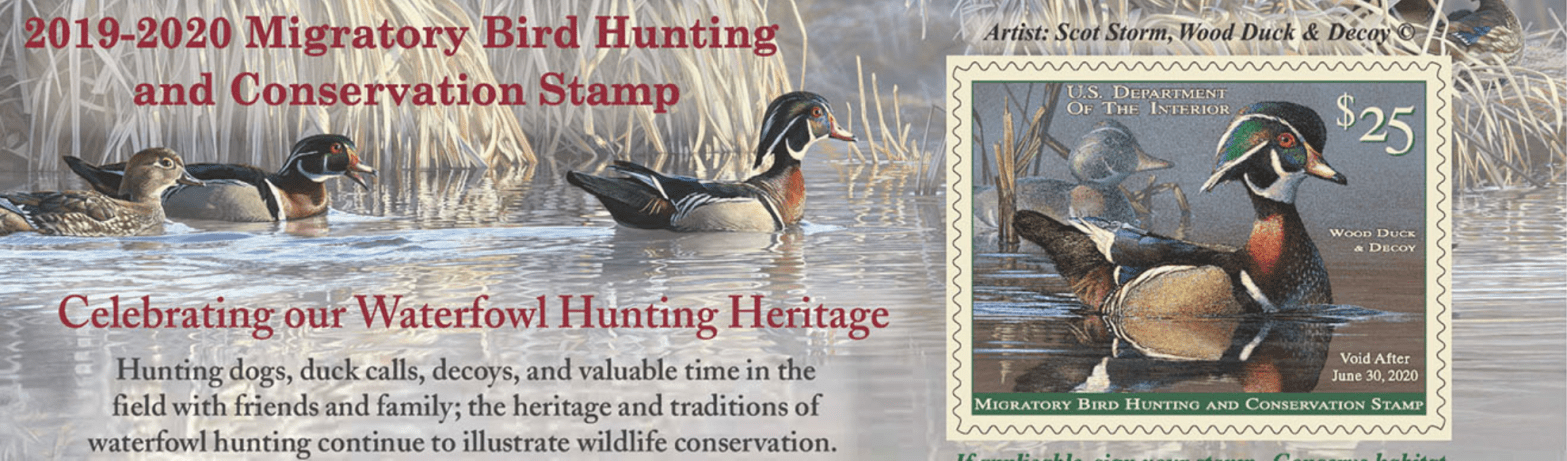
The other day I met an older woman who happened to be a pretty accomplished bird watcher. I was talking to a buddy of mine about ducks when she jumped into the conversation and I was surprised to hear how well she knew her waterfowl. We talked for a solid hour about our experiences, what we have seen, and places to go look. During that conversation, I brought up if she buys her duck stamp every year. To my disbelief, she had never even heard of a duck stamp. I was honestly shocked that someone with this much knowledge of birds and the bird watching community that she wasn’t informed about what a duck stamp was. As many of you know I have an obsession with waterfowl. I love looking at waterfowl, hunting waterfowl, and eating waterfowl. All waterfowlers know what a duck stamp is since it’s required by law that you have to purchase one to hunt waterfowl. However, I wanted to dive deeper to shed some light on this great conservation tool.
Quick History
The history of the duck stamp dates back to 1934. When President Franklin D. Roosevelt officially signed the Migratory Bird Hunting Stamp Act also known as the Duck Stamp Act. This occurred during the time of the dust bowl. Due to these troubling circumstances, they decided to take preventative preservation measures to help preserve vital wetlands. The migratory waterfowl stamp has been one of the most successful conservation tools because it allows 98 cents of every dollar to go straight back into conservation through the Migratory Bird Conservation Fund.
How it works
The Migratory Bird Conservation Fund started in 1929. The fund grows through four different main sources. First and the most famous one is through the purchase of Migratory Bird Hunting Stamps and Conservation Stamps (Duck Stamps). Followed by appropriations authorized by the Wetlands Loan Act of 1961; Import duties collected on arms and ammunition; and receipts from the sale of refuge admission permits as provided for by the Emergency Wetlands Resources Act of 1986. Since the fund started in 1929 over 800 million dollars has gone into that fund.
Where Do These Conservation Dollars Go
The Migratory Bird Conservation Fund has accomplished some remarkable feats in conservation since its inception. With the fund, they do some pretty amazing things like protecting over 5.7 million acres of habitat. Of those 5.7 million acres the Migratory Bird Conservation Fund is responsible for obtaining 4 million acres alongside the U.S. Fish and Wildlife service. These dollars also go into protecting and funding the National Wildlife Refuge System. Since the start back in 1929, over 300 National Wildlife Refuges have been created using money raised from selling ducks stamps. Duck Stamp dollars also go to purchasing and preserving small wetland areas and upland areas, as well as a plethora of other conservation efforts.
How can you help
GO BUY YOUR DUCK STAMP. If you’re looking to get involved in conservation the duck stamp is probably the most straightforward and effortless way to actively participate in supporting conservation. The duck stamp is one of the most successful conservation tools we have. Nearly 100% of the dollars collected from its purchase is guaranteed to go to support conservation in one form or another. In purchasing a duck stamp you can participate in wildlife and habitat conservation. It doesn’t matter if you are a hunter, birder, or someone who just likes the outdoors you can help preserve our natural resources for future generations to enjoy. The duck stamp can be purchased by anyone. It can easily be purchased right at your local post office or online. The best part is that it only costs 25 dollars and they are beautiful and fun to collect.
See Your Dollars at Work
If you want to see your conservation dollars at work you can go and visit one of your state’s beautiful National Wildlife Refuges. Make sure you bring your duck stamp because a current duck stamp grants you a free entrance into any National Wildlife Refuge that charges admission. Click here to find one closest to you. Also, go check out the U.S. Fish and Wildlife website for more information.
 Leaky Waders